
5f4dcc3b5aa765d61d8327deb882cf9932 characters·hex
MD5
medium confidenceRaw hashNTLM
medium confidenceNetwork / authMD4
low confidenceRaw hashLM
low confidenceNetwork / authLM is usually seen as two 16-character halves
Detect likely hash algorithms from their prefix, length and character set. Get matching hashcat modes and John the Ripper formats without uploading a single value.
Likely formats
Candidates are ordered by confidence
5f4dcc3b5aa765d61d8327deb882cf99LM is usually seen as two 16-character halves
2aae6c35c94fcfb415dbe95f408b9ce91ee846ed$2b$12$KIXQhYwM1D.7cs3N6BqtXOqgiNdYYp2F0te0B0cnPA9NDlBiVQp5y$argon2id$v=19$m=65536,t=3,p=4$c29tZXNhbHQ$RdescudvJCsgt3ub+b+dWRWJTmaaJObG*94BDCEBE19083CE2A1F959FD02F964C7AF4CFC29Use hash tooling only for credentials and systems you own or are explicitly authorized to audit. Identifying a format does not grant permission to recover the value behind it.
One paste is enough. Every line is matched against the prefixes, lengths and character sets used by the formats you meet in real credential exports.
MD4, MD5, SHA-1, the SHA-2 family, SHA-3, RIPEMD and other fixed-length hexadecimal or Base64 digests.
Bcrypt, scrypt and Argon2 values, including the variant, version, memory, iteration and parallelism settings they embed.
Traditional DES crypt, MD5-crypt and SHA-256 or SHA-512 crypt entries as they appear in shadow files.
WordPress phpass, Django PBKDF2, Drupal, Joomla and similar framework formats with salts and iteration counts.
MySQL, MSSQL, Oracle and PostgreSQL authentication values, recognized by their typical prefixes and lengths.
LDAP, Kerberos and NetNTLM authentication captures next to CRC and other short checksum formats.
No account, no upload and no database lookup—only local format analysis in your own browser tab.

Local processing
Every hash is analyzed by your browser. Nothing is uploaded to DorkPlus and no value is sent to an external service.
01
Detected formats
Raw digests, password hashing schemes, Unix crypt, application, database and network authentication formats.
02
Limits and accounts
No login, no line cap and no queue. Paste a list, read the candidates and copy or export them instantly.
03A hash identifier compares a value with the syntax used by known algorithms and applications. It narrows the possibilities from visible evidence—length, allowed characters, separators, prefixes, embedded cost parameters and salt structure.
Analyze a single value or an entire list. Duplicate and empty lines are removed automatically and every remaining line is examined on its own.
5f4dcc3b5aa765d61d8327deb882cf99Each value is measured by length, character set, separators and known prefixes. Structured formats are recognized by their markers, including embedded cost parameters and salts.
$2b$12$KIXQhYwM1D.7cs3N6BqtXO…Results are ordered by confidence. A high label means the format carries an unambiguous marker, while raw hexadecimal digests return several realistic candidates because MD5, NTLM and MD4 share the same visible shape.
Copy the hashcat mode or John the Ripper format for a candidate, export one hash type as TXT, or download an organized ZIP. Verify the candidate against the application, database or export that produced the value before any authorized audit.
hashcat -m 0Handled automatically
Raw hexadecimal hashes are the most ambiguous values you can be handed. A 32-character hexadecimal string is commonly MD5, but NTLM and MD4 have exactly the same visible shape. Without information about the source system, no identifier can separate those algorithms from the digest alone.
Structured password hashes provide stronger clues. Bcrypt starts with prefixes such as $2b$, while Argon2 embeds its variant, version, memory, iteration and parallelism settings. Unix crypt, WordPress phpass, Django PBKDF2, database formats and network captures also carry recognizable markers.
Common use cases
Pick the right hashcat mode before an approved recovery run.
Classify credential material found in an investigation export.
Check which hashing scheme an application actually stores.
Recognize a challenge value without guessing the algorithm.
Understand what format detection can and cannot tell you.
More free utilities

Apply length and character policies
Sort valid combo lines A–Z
Keep email-formatted combo rows
Strip pipe and tab capture suffixes
Remove repeated combo lines locally
Clean combolists and combo bases locally

Apply one operator set to many keywords
Generate before: and after: date searches
Build focused public-document searches
Search for words and phrases in page titles
Find indexed URL words and route patterns
Build searches for one domain or URL prefix
Build advanced search queries from operators and templates

Generate MD5, SHA and MySQL hashes at once

Look up MD5, SHA-1 and SHA-256 hashes online

Create FUZZ-ready parameter templates
Remove normalized duplicate URLs
Extract unique query-string keys
Turn complete URLs into unique paths
Extract unique hostnames from URLs
Clean and normalize complete URL lists
Clean URLs and extract domains, paths and parameters
Browse every free DorkPlus tool that runs locally in your browser.

DorkPlus Dehasher searches a large hash database when identification alone is not enough for your authorized recovery workflow.
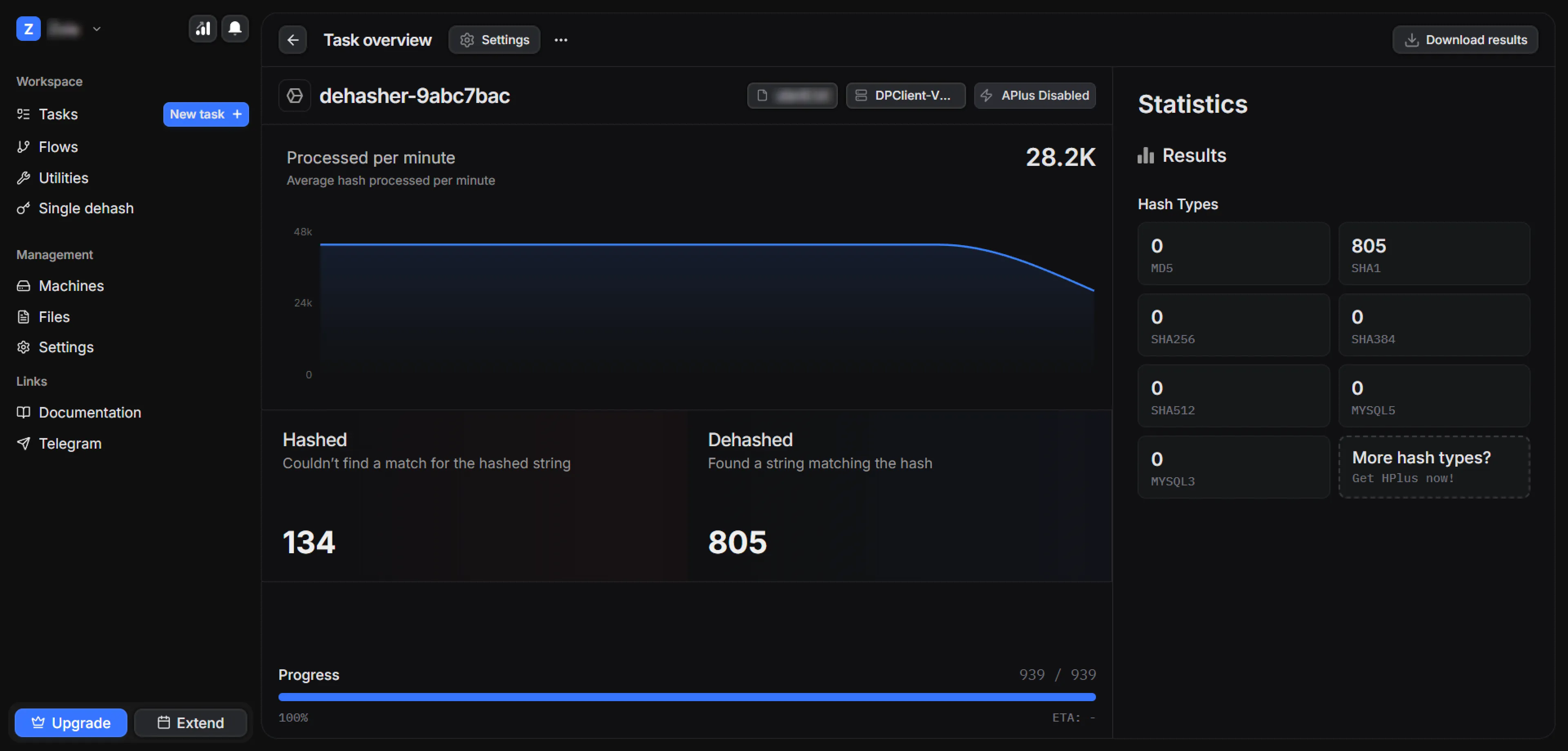


DorkPlus has been around for over three years. It started as a Google proxyless scraper and grew into an all-in-one pentesting solution, evolving week after week.
Copyright © 2026 DorkPlus
All systems operational